
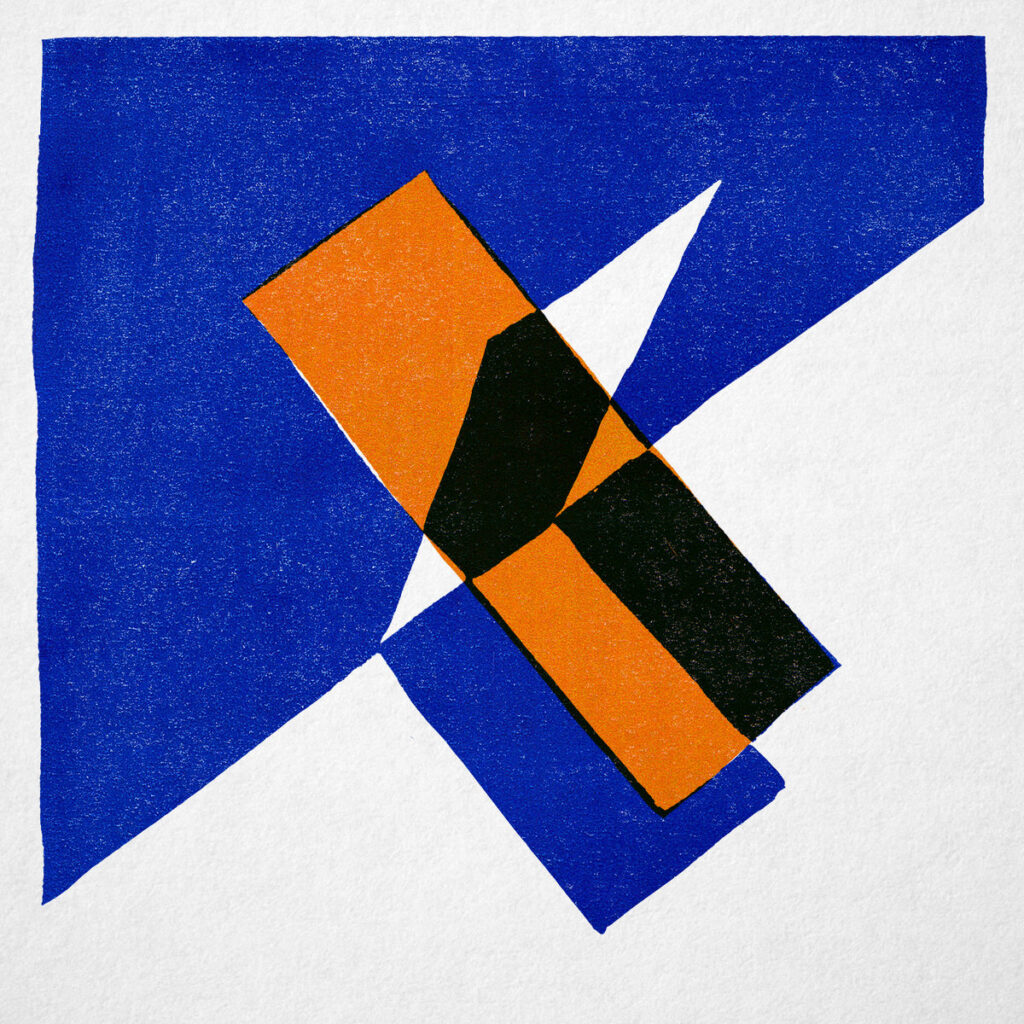
Our song and music video for Always On verges on the horrific. While on the surface it’s about social media, it comes from a lot of different places. The journey of it’s creation takes us from dolls becoming human to social experiments on mice and ultimately the consequences of switching it all off. This is part one of two.
Our song and music video for Always On verges on the horrific. While on the surface it’s about social media, it comes from a lot of different places. The journey of it’s creation takes us from dolls becoming human to social experiments on mice and ultimately the consequences of switching it all off. This is part one of two.
We know social media is damaging us. It can cause a host of personal problems from dopamine addiction to body dysmorphia and has wider damaging effects on our culture, yet we continue to use it. We’d trash these apps in an instant, but social media has become so integral to our society that as musicians, we must post to be heard. If we’re not spending time on these platforms, we basically don’t exist.
It’s not without it’s rewards, dopamine aside. Unique connections with people whom we’d otherwise never have met, keeping in touch with family and friends in far-flung locations (albeit typically in a passive way) and, as a completely indie DIY band, it has enabled us to grow our audience and reach people we couldn’t have without being on a label.
However, those silver linings seem too few when I enter one of these scroll-holes. I can feel it changing the way my mind works while I’m using it, and I instinctively want to get off. I know it’s bad for me, so how can I strike a workable balance? Could I even operate without them today?
Feeding the feed
Doing our band’s PR I’ve had to learn how these platforms work. The algorithms on all social media platforms are designed to reward keeping people in the app for as long as possible. Post every day. Post several times a day. Make sure to interact with other people’s posts. It’s not enough to just post, or like, you should be commenting too. The more time you spend there, the more others will join in, spending their time in the app too. And whatever you do, don’t stop. Consistency is key. If you drop the ball, you’ll get pushed down the feed.
These machines were designed to addict you, to keep you in their thrall. Autoplay, infinite scroll, algorithmic recommendations—each of these was implemented as a means of prolonging and profiting from your time and attention…. How could you possibly blame yourself for getting caught in it?
August Lamm, You Don't Need A Smartphone
It used to be that once a person followed you on social media they’d be guaranteed to see your posts. This changed long ago. In Meta’s case, so that they could monetise this feature. Fancy “boosting” your post so that the people who are following you will actually see it? That’ll cost you. They’ve taken your valuable connection to people who like what you do and are charging you a ransom to get it back.
If a song is released without a PR campaign, does anyone hear it?
The PR work involved in a release is huge and a large part of it is posting and interacting on social media, on as many platforms as possible. The timeline is traditionally about three months of promotion leading up to release, with at least six weeks of public promotion on social media.
Bigger bands can afford to have a dedicated person or team employed to do this, but as indie musicians it’s down to us. We’ve even created a DIY PR guide to help other musicians in this situation. Between day jobs and the work of actually making and performing music, it sometimes feels impossible to fit this work in.
One day we decided to experiment with not doing the usual social media campaign for a single release. We just emailed it to the reviewers and DJs we had relationships with, sent a newsletter to our fan mailing list and did about 5 social media posts about it. It didn’t go well, barely anyone heard it.
We went back to using the full PR timeline for our subsequent releases. In October 2022 we released the single Nightclub Mishap. Through our promotion efforts it got played on BBC radio. Through further awareness-raising work on social media, so many people contacted the DJ when it was played that we were invited to do our second live lounge in the BBC studio.
The PR had paid off, but we were completely burnt out from being on these platforms constantly. Creating content for the PR campaign meant we’d had no time to create any music for the album. So we announced that we were taking a break from social media and would only be communicating with fans via our newsletter and our monthly livestream, BOOcast.
It feels like everyone has done that “I’m leaving social media” post and eventually succumbed to reinstalling the apps. We felt pretty strongly about leaving for good at the time but had the foresight to say we were just “taking a break”. We knew that if we wanted our next release to be heard, we’d be back.
For five months we only posted once a month to remind people to watch our livestreams and finally got on with making our album. It was completely liberating. We only returned to regular posting to promote release of our next single Always On, along with the completed album Compulsory Games.
Always On is our takedown of the toxicity of social media.
Algorithms in Flesh
Aside from our own turmoil in dealing with these platforms, I had been affected by something I’d seen on my commute along the Sussex coast. Between the bus seats in front of me, I couldn’t help seeing the lit screen of a smartphone in a girl’s hand. She was scrolling through reel after reel of women who looked identical, touting affordable plastic surgery options. She hearted several posts and even clicked an affiliate link to browse a surgery website offering filler deals. As I got off the bus I caught a glimpse of her. She must have only been 13-14 years old, with pristine, glowing skin, wide eyes unnecessarily embellished by heavy false eyelashes, accented by perfectly stencilled dark eyebrows. She was only just beginning to grow into her adult form. Surely not a candidate for plastic surgery?
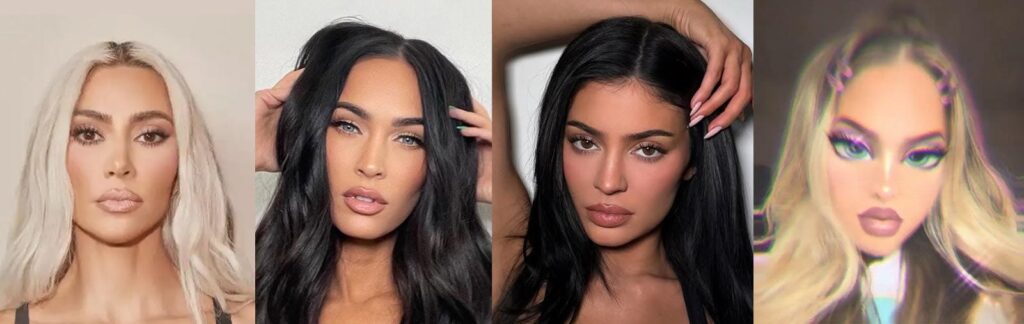
I discovered that the uniform look she was scrolling is known as “instagram face”. Jia Tolentino describes its key features in an article from The New Yorker:
It’s a young face, of course, with poreless skin and plump, high cheekbones. It has catlike eyes and long, cartoonish lashes; it has a small, neat nose and full, lush lips.
She notes the way that even race has been smoothed out of this look:
It was as if the algorithmic tendency to flatten everything into a composite of greatest hits had resulted in a beauty ideal that favored white women capable of manufacturing a look of rootless exoticism.
I couldn’t help but notice Instagram face’s resemblance to the hugely popular 2000s dolls Bratz. Beauty culture ate itself in 2023 when Kylie Jenner partnered with the company to release her own series of the dolls. “I have been a fan of Bratz since childhood and I’ve always wanted my own Bratz doll,” Jenner said in a press statement. No kidding.
The attitude to plastic surgery today seems to be a pragmatic approach to upgrading your look to get ahead in the world. The implication is that if you look like this, you’ll be successful. Our individual faces are no longer a means of expressing our emotions and our racial heritage, but merely an awkward surface which we must sand all expression away from, to give us a more desirable, homogenized mask of prosperity.
As a millennial who only had glossy magazines, celebrities and billboards to influence my body image as a teen, it’s easy for me to reject the idea of Instagram face as dehumanising in the extreme, but for a person who has grown up scrolling, more immersed in the world online than the world around them, it could be impossible to contemplate living with the imagined disadvantage and hardship brought about by one’s own, embodied physical reality.
Everything seen through a mirror
Can’t touch reality
Why would you want to be
flesh it decays so easily
Pixel vitality is immortality
— excerpt from the lyrics for Always On
Read about The Beautiful Ones and discover if we can find a way out of these systems in part two.